News
Island wines according to Pascaline Lepeltier: from a fragmented reality to a global category
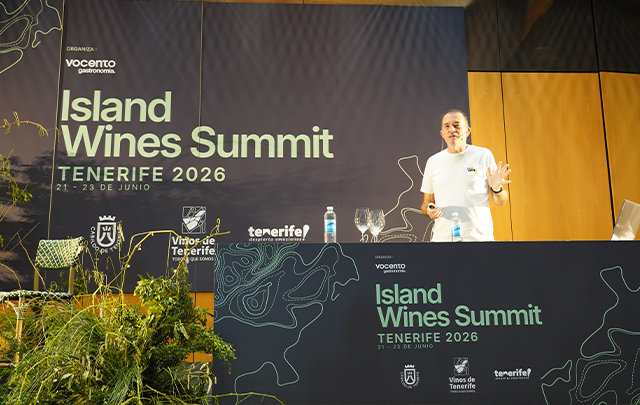
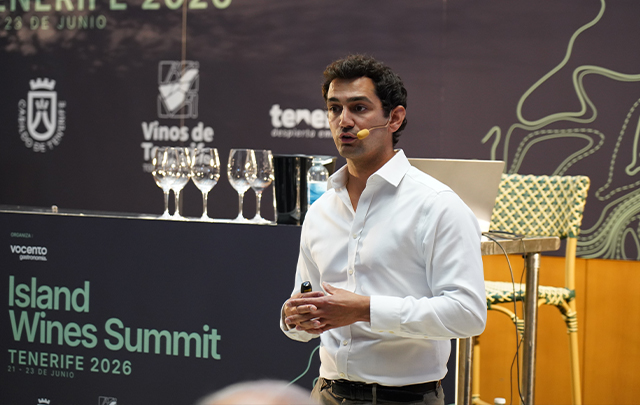
Island wines according to Pascaline Lepeltier: from a fragmented reality to a global category Pascaline Lepeltier, a French sommelier with twenty years’ experience, seventeen of which were spent in New York as a wine buyer, devoted her talk in Tenerife to something which, paradoxically, she had never analysed in depth: the concept of ‘island wine’. Drawing on her dual background—in philosophy and sommelier studies—she posed a central question: when does ‘island wine’ cease to be a mere geographical description and become a genuine conceptual and commercial category?
Lepeltier recalled that islands have always produced wine: from Cyprus and Madeira to Tasmania. However, for centuries, Sicily was spoken of as part of Italy and Santorini as part of Greece, without grouping them under a common notion of ‘island wine’. He cited the Parisian merchant André Julien, who in 1806 catalogued the world’s vineyards, also describing islands such as Madeira, the Azores and the Greek islands, but always in geographical terms, never as a conceptual whole. His thesis is that the category ‘island wine’, as it is currently used in the sector, actually emerged only 20–25 years ago, when the media, sommeliers and the market began to treat it as a coherent family with its own identity.
To illustrate the diversity hidden behind this label, he contrasted extreme examples: the high-altitude vineyards of La Palma or the lunar landscapes of Lanzarote, set against Long Island – a flat island near New York where modern viticulture began in the 1970s. Under the single label ‘island wine’, extreme topographies, genetic isolation, pressures from tourism and very different colonial histories coexist. The concept, whilst commercially useful, tends to oversimplify highly complex realities.
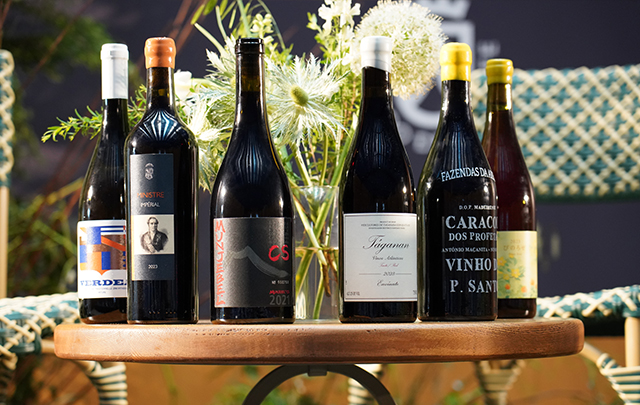
Greece features in his account as one of the starting points for the modern prestige of island wines. Of Greece’s 33 PDOs, 18 are on islands, and a large proportion of the country’s quality wines have been developed precisely there. Lepeltier highlighted the pioneering role of Santorini: its iconic landscape, the Assyrtiko grape variety, the shift from sweet and oxidative styles to taut, ‘mineral’ dry whites, and the rise of wine tourism since the early 20th century. Added to this are the Greek diaspora and the international spread of the Mediterranean diet, which made Santorini one of the first ‘media role models’ for island wine. Other regions, such as Zakynthos with its historic Verdea, have been able to survive and reposition themselves thanks to the fact that there is now a market willing to pay for complex heritage wines that are costly to produce.
A second major focus of the presentation was Corsica, an example of crisis and rebirth. Following the arrival of ‘pieds-noirs’ settlers in the 1960s, the island saw its vineyard area grow from 5,000 to 32,000 hectares, largely planted with varieties such as Alicante Bouschet for bulk wine, thereby diluting the local identity. The conflict came to a head with the nationalist attack on a cooperative in Aleria in 1975. Within a few years, the vineyard area had shrunk to around 8,000 hectares and a deep crisis ensued. From the 1980s onwards, a handful of visionary winegrowers decided to revive indigenous varieties and their own distinctive styles, supported by conservation policies and by importers such as Kermit Lynch, who began introducing Corsican wines to the United States when almost no one believed in them. Today, producers such as Jean-Claude Abatucci, with his cuvées based on old plots of Corsican varieties deliberately preserved, embody an economic success that would have been unthinkable decades ago: red wines that are highly sought after in the international fine dining scene.
Lepeltier highlighted the case of Sicily, and in particular Mount Etna, as a key factor in establishing island wines as an attractive category. In the early 2000s, the discourse on ‘volcanic wines’ became widespread, from academic circles to the general public, and Etna brought together several trends: volcanic soils, old vines, altitude, ambitious producers and, in the case of Frank Cornelissen, a foreigner with a culture of great wines, market vision and a firm commitment to minimal intervention. His work, promoted by importers such as Zev Rovine in the US, capitalised on the global boom in natural wine and reinforced the mental association between island, volcano and wines with a strong sense of place.
In the Spanish-speaking world, the Canary Islands represent, for Lepeltier, a veritable ‘Copernican revolution’ in the narrative. Whereas they were previously seen as a periphery within Spain, over the last decade certain US media outlets have presented the Canary Islands as a symbol of the ‘new Spain’. Importers such as José Pastor, who were seeking light, distinctive wines that strayed from the concentrated, modern style, found exactly that profile in Canarian producers. The strong communication skills of some winegrowers—language skills, social media presence, personal storytelling—and their constant work in the market have transformed the Canary Islands from a curiosity into a cult origin on specialist wine lists.
Building on this, Lepeltier argued that today ‘island wine’ is now a fully established category: it features in general-interest articles, is used in sommelier training and on themed wine lists, and serves as a shortcut to sparking the curiosity of an audience seeking alternatives to overpriced classics. This explains, for example, the recent success of projects on historic islands such as Porto Santo, in Madeira, where winemakers such as Antonio Maçanita are reinterpreting traditional grape varieties and soils through the lens of contemporary dry wines, integrating wine tourism, heritage and a keen understanding of the global market.
The sommelier took this line of reasoning a step further with Japan, and Hokkaido in particular. She recalled, quoting winemaker Bruce Gutlove, that Japan is itself a country of islands — some 40,000 — and that its emerging wine scene is, by definition, ‘island wine’. Hokkaido, with a climate suitable for wine-growing grapes and the arrival of internationally renowned wineries, has become one of the most sought-after regions in New York, continuing the trend: island territories, isolated either climatically or culturally, capable of offering distinct and highly defined profiles.
In his conclusion, Lepeltier compared the concept of ‘island wine’ with that of ‘minerality’: both emerged as very useful terms for describing diffuse realities, and their success has made them both powerful and vague. The challenge now, he argued, is to refine the concept: not to lump volcanic soils and sandy soils, hyper-touristy islands and remote enclaves under the same label, but to use the category as a gateway, and then explain precisely what makes each place unique. At the same time, he warned of shared risks: tourism, once an ally, becomes a threat when islands drift towards a monoculture of tourism; labour shortages make it difficult to sustain demanding agricultural practices; and many territories are in danger of becoming mere backdrops for visitors. The islands, he concluded, function as small-scale laboratories for problems and solutions that will soon affect the mainland as well. Understanding how and why island wines have succeeded — and what now puts them at risk — is also a way of thinking about the future of wine as a whole.
Related news
News
The Island Wines Summit in Tenerife is fostering a global community with a promising future for island wines
News

Volcanoes, the sea, and century-old vineyards: an in-depth look at Tenerife’s wines
News
Island wine establishes itself as a global category at the Island Wines Summit
News
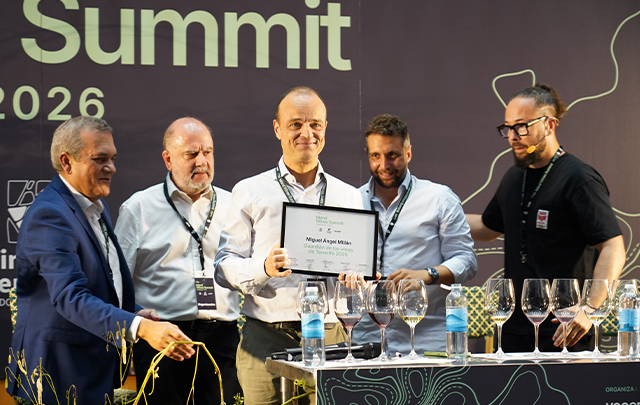
Miguel Ángel Millán, Guardian of Tenerife Wines 2026
News
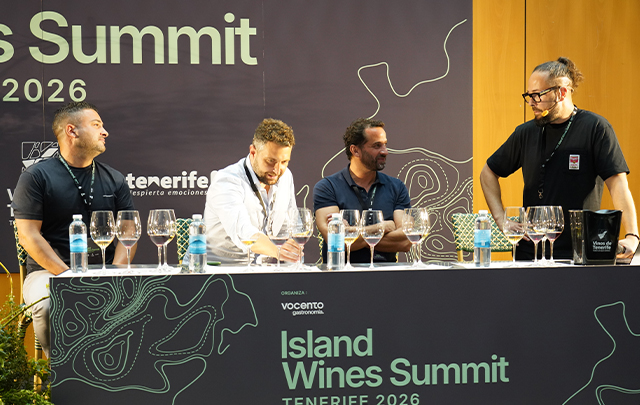
Island status as a refuge for the Atlantic wine-growing heritage
News
Four Islands in Five Sweet Wines
News
The minerality of wine as a neurosensory experience
News
Island wines: the present and future in your glass
News
The Mediterranean in a Glass: identity, volcanoes and islands in a thrilling tasting experience
News