News
The minerality of wine as a neurosensory experience
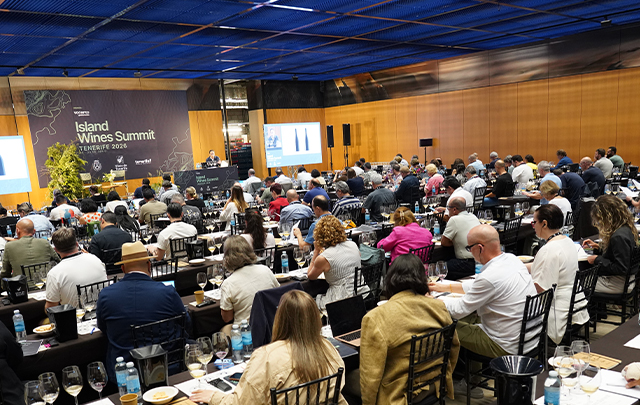
In his presentation, François Chartier challenged the traditional notion that a wine’s ‘minerality’ derives directly from the rock, and presented it as a complex perception rather than a simple physical characteristic. He explained that what we call minerality arises from the interaction between geology, the vineyard’s microbiome, aromatic molecules, mouthfeel, sensory memory and the taster’s emotions.
Using examples of wines from Tenerife and the Greek island of Tinos, he demonstrated how very different landscapes, soils and climates can produce surprisingly similar sensations. He emphasised that each terroir possesses its own ‘chemical signature’, demonstrable through analyses capable of identifying a wine’s origin with over 90 per cent accuracy, and clearly distinguished between ‘mineralisation’ (the actual presence of minerals) and ‘minerality’ (a constructed neurosensory perception).
Drawing on recent studies, he argued that minerality is not limited to a single molecule, but rather results from an interplay of chemical, tactile and cognitive stimuli. He even proposed a ‘gastronomic DNA’ of minerality, in which foods such as oysters, seaweed, roasted roots or kimchi trigger the same families of perceptions as certain wines. He distinguished between marine, lithic, fermentative and aromatic minerality, and linked each to specific ingredients and textures to refine culinary harmonies.
He also championed island and coastal vineyards, such as those in Tenerife, as prime natural laboratories for studying these mechanisms. For Chartier, the crucial question is no longer to define what minerality is, but to understand how that coherent sensory image—which unites science, landscape and emotion in every glass—is constructed in our minds.
Related news
News
The Island Wines Summit in Tenerife is fostering a global community with a promising future for island wines
News
Volcanoes, the sea, and century-old vineyards: an in-depth look at Tenerife’s wines
News
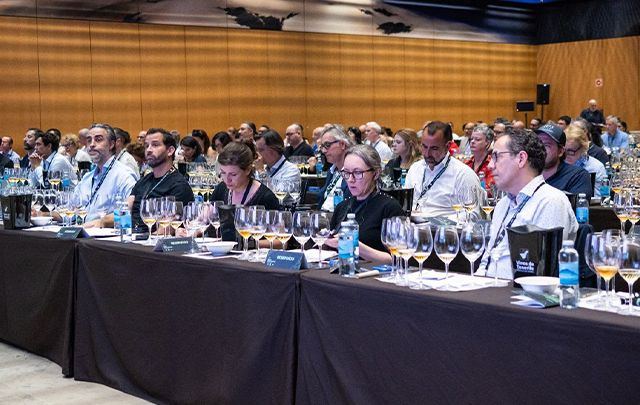
Island wine establishes itself as a global category at the Island Wines Summit
News
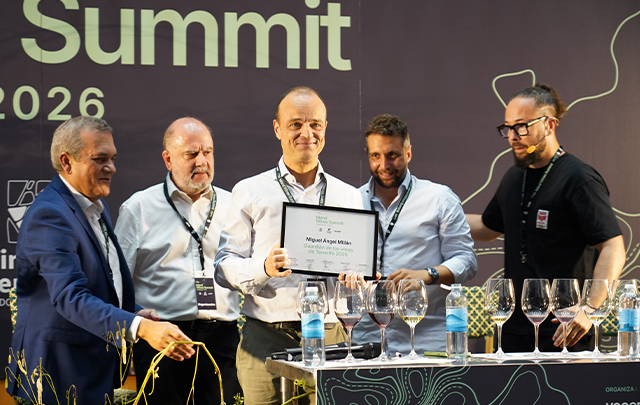
Miguel Ángel Millán, Guardian of Tenerife Wines 2026
News
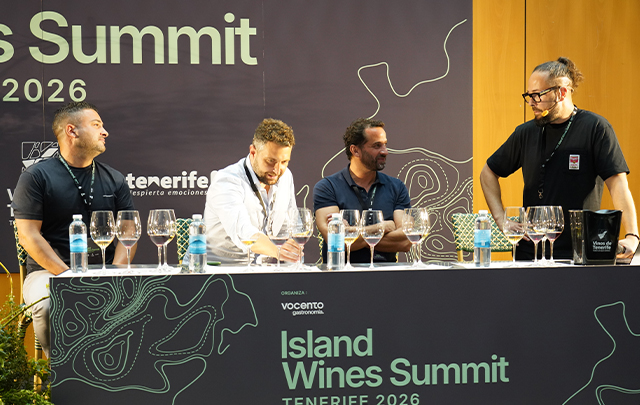
Island status as a refuge for the Atlantic wine-growing heritage
News
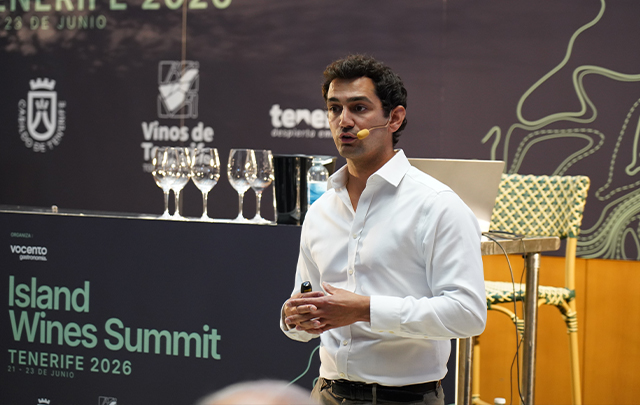
Four Islands in Five Sweet Wines
News
Island wines: the present and future in your glass
News
The Mediterranean in a Glass: identity, volcanoes and islands in a thrilling tasting experience
News
Island wines according to Pascaline Lepeltier: from a fragmented reality to a global category
News