News
The Island Wines Summit in Tenerife is fostering a global community with a promising future for island wines
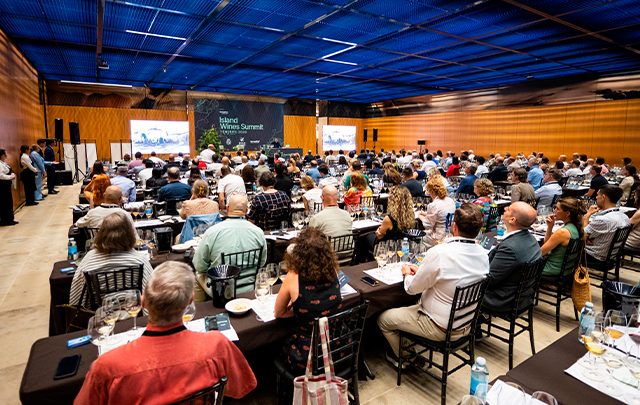
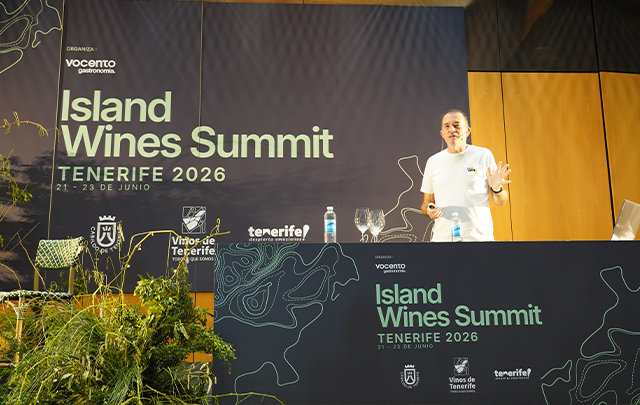
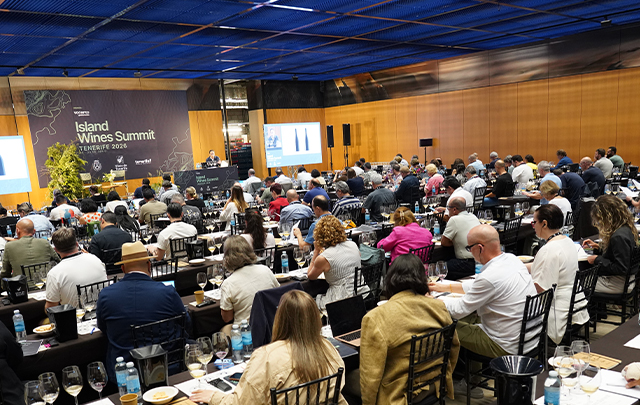
The first edition of the Island Wines Summit came to a close this afternoon in Tenerife, leaving behind a legacy of establishing island wines as a distinct category within the international wine scene—not only because of their unique characteristics—shaped by the influence of the ocean, volcanic soils, extreme climates, and the adaptation of their grape varieties—but also because of their ability to foster a global community united by a shared identity. Sommeliers and experts on island regions from around the world have shared experiences and a common vision regarding the authenticity of these wines. Beyond geography, the event has highlighted that there is a bond between very different islands that share challenges, histories, and a special way of expressing their territory through wine.
During the closing ceremony, Valentín González, a councilor for the Tenerife Island Council, emphasized that wine is much more than a product, as it represents the island’s identity: “When we talk about wine, we are also talking about territory, landscapes, and culture.” In his remarks, he highlighted the uniqueness of Tenerife’s wines and the work of winegrowers and winemakers, and thanked all participants for their efforts in a conference that, he assured, was created “with the aim of lasting, with the aim of continuing over time.” For his part, the director of Vocento Gastronomía Benjamín Lana highlighted the support provided by the Tenerife Island Council for the event and recalled that the Island Wines Summit “was a dream just two years ago, and I believe it has become a wonderful reality.” He also advocated for the need to build a community around wine and gastronomy because “the future lies in uniting, and we must defend our future.”
On the final day, attendees at the Island Wines Summit swapped presentations for field visits to experience firsthand the island’s wine potential. The experience allowed them to tour 11 wineries starting first thing in the morning and gain insight into the work of viticulturists, winemakers, and projects that are forging their own wine identity.
The itinerary included visits to Bodega Altos de Trevejos, Bodega Suertes del Marqués, Bodega El Lomo, Bodega Viñátigo, Bodega Tajinaste, Bodega Tempus, Bodega Ferrera, Bodega El Sitio, Bodega Linaje de Pago, and Bodega Cráter, in a day designed to showcase the sector’s potential on the ground.
Beyond the masterclass by Josep Roca on Sunday afternoon and the tastings on Monday, the tour allowed participants to understand how each winery interprets the island through its own unique lens: elevation, soil, local grape varieties, vineyard work, family tradition, innovation in the cellar, and the ability to create experiences centered around the vineyards. The event thus highlighted a model that goes beyond mere production, connecting wineries to the story of the island wines’ uniqueness.
With this professional visit, the Island Wines Summit reinforced one of its key messages: island wines have more than enough to offer to compete on the international stage through their authenticity. The event also demonstrated that the future of island wine depends as much on oenological excellence as on the ability to tell the stories of these unique territories.
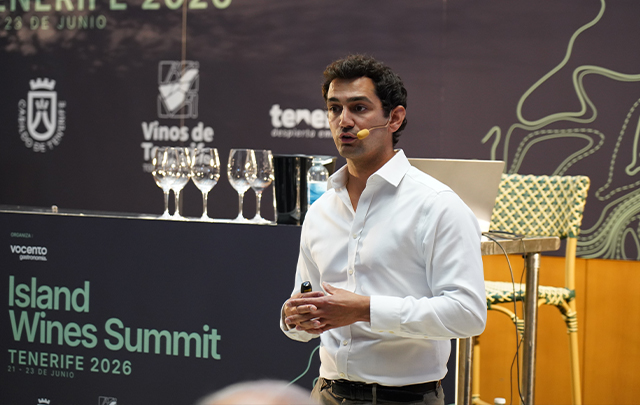
Prior to the tour of vineyards and wineries, Master of Wine Fernando Mora delivered a talk that provided context for the experience with a reflection on the origins of Tenerife’s wines and the island’s uniqueness. During his talk, Mora explained that understanding the island’s wines requires first understanding the very nature of Tenerife, shaped by the combination of two fundamental factors: insularity and volcanism. A complex relationship that, as he pointed out, determines much of the character of the landscape and the wines produced there. “Tenerife is a blend of insularity and volcanism. It is difficult to know where the effect of insularity ends and that of volcanism begins.” These two traits are compounded by very specific climatic factors, “with Mount Teide acting as a climatic shield and the volcanic mountain range creating five climatic zones—some rainy, others not—with significant temperature variations between night and day, as well as differing humidity levels, winds, and so on.”
Mora also highlighted the history of the island’s vineyards as a key element contributing to the uniqueness of Tenerife’s wines. “Tenerife has vineyards over 100 years old, ungrafted vines, trained using the braided cordon method (a local vine-training system based on manually intertwining the shoots)... It’s like the Jurassic period of viticulture,” stated the Master of Wine, who also made sure to mention the exceptional nature of working “in very extreme vineyards set in complex landscapes.” The importance of understanding the terroir where the wine is produced was also emphasized by Tenerife winemaker Pablo López (El Sitio), who noted that “wine isn’t about where it’s made, but where the grape comes from.”
Following this introduction by Fernando Mora, conference attendees toured the island’s wine-growing regions to learn about the work that Tenerife’s winemakers are carrying out at the many wineries scattered across the island. For Roberto Santana (Bodega Envínate), this diversity is crucial to strengthening a region, since it “grows in stature when there are different interpretations of the same territory. Burgundy is renowned not because there is a single great winery, but because it has a multitude of them, each offering a different interpretation. This is something that is now also happening in the Canary Islands.”
Related news
News
Volcanoes, the sea, and century-old vineyards: an in-depth look at Tenerife’s wines
News
Island wine establishes itself as a global category at the Island Wines Summit
News
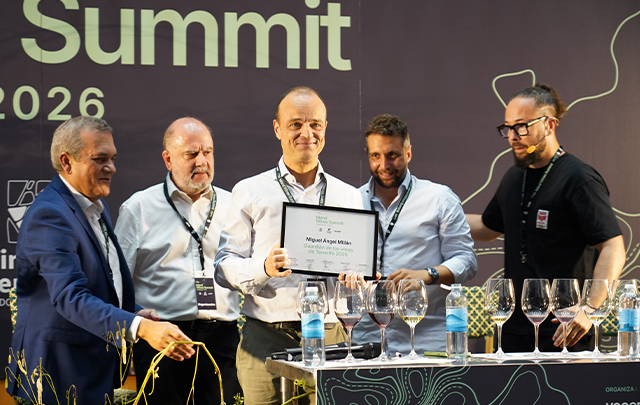
Miguel Ángel Millán, Guardian of Tenerife Wines 2026
News
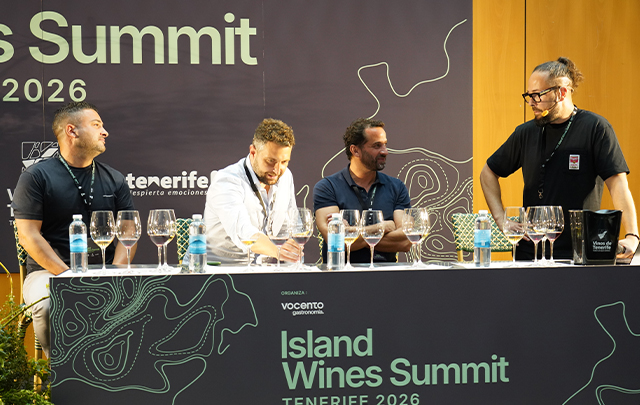
Island status as a refuge for the Atlantic wine-growing heritage
News
Four Islands in Five Sweet Wines
News
The minerality of wine as a neurosensory experience
News
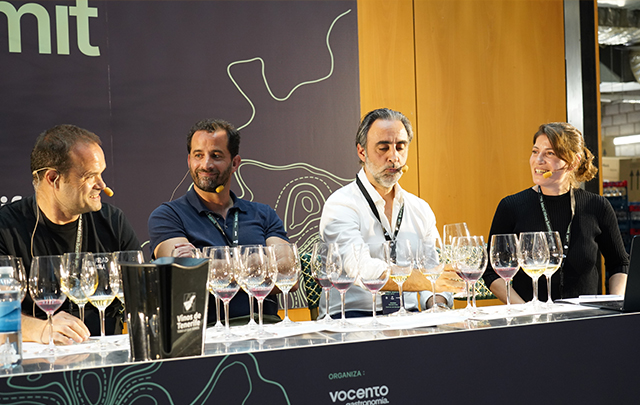
Island wines: the present and future in your glass
News
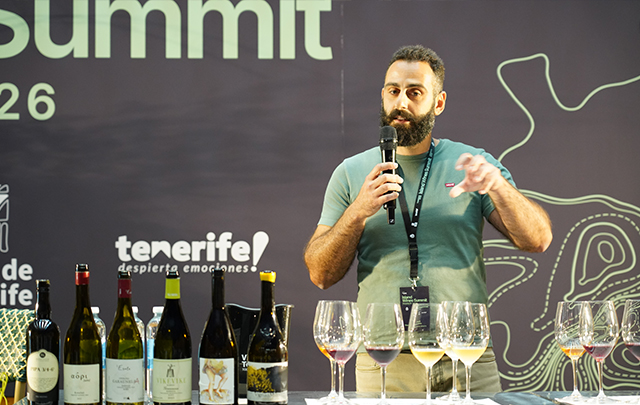
The Mediterranean in a Glass: identity, volcanoes and islands in a thrilling tasting experience
News
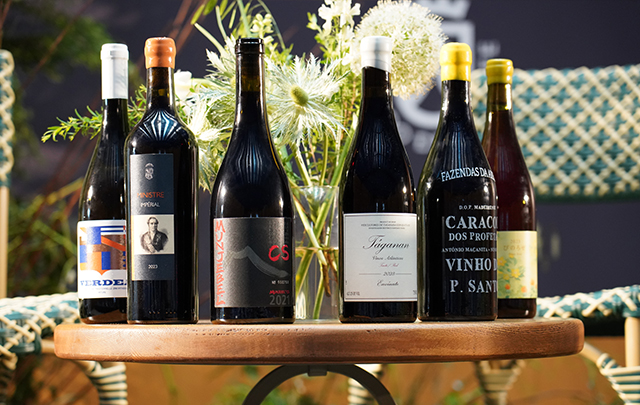
Island wines according to Pascaline Lepeltier: from a fragmented reality to a global category
News