News
Josep Roca: “Emotions affect the quality of wine”
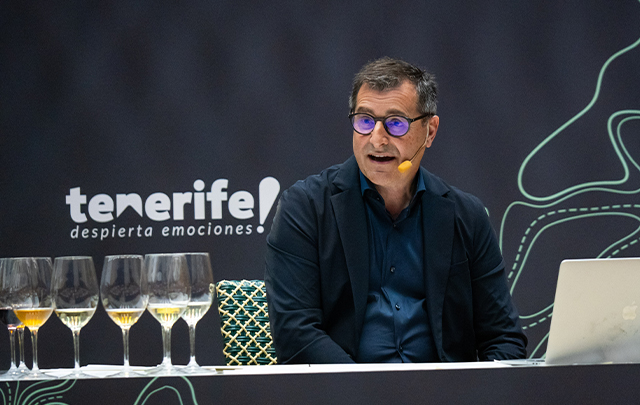
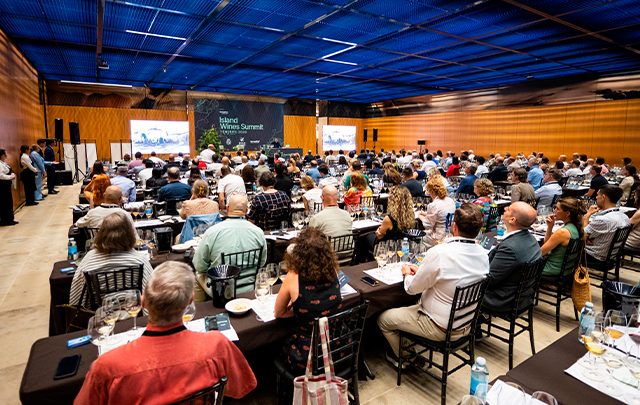
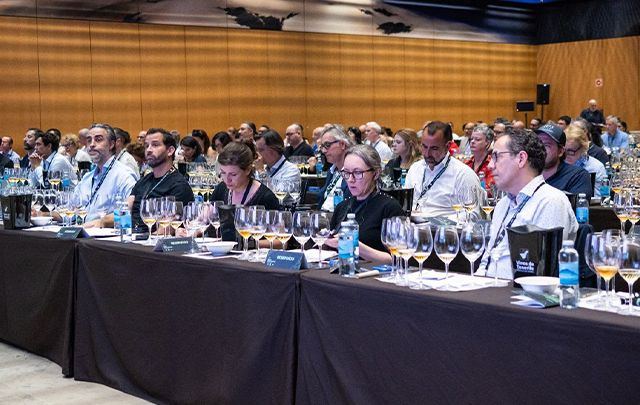
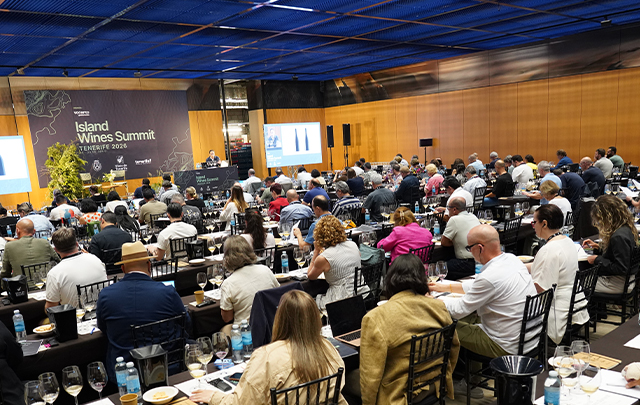
Sommelier Josep Roca (El Celler de Can Roca***, Girona) opened the Island Wines Summit with a masterclass tasting in the Auditorium of the Hotel Taoro (Puerto de la Cruz) in front of more than 200 sommeliers, winemakers and Masters of Wine from around the world. The event, organised by Vocento Gastronomía, with the Tenerife Island Council and Turismo de Tenerife as institutional sponsors and in collaboration with Vinos de Tenerife, kicked off the conference programme, which will take place on Monday and Tuesday at various venues across Tenerife.
In a measured and intimate tone, Josep Roca delivered a lecture in which even the silences formed part of a discourse rich in literary quotations and historical references. Roca, one of the world’s leading authorities on wine, began his talk with a poetic and symbolic reflection on the islands’ wine. He argued that “every glass contains a story” and championed the islands as hubs of knowledge where tradition and innovation coexist. “The islands are light, they are a beacon and they are opportunity,” he noted, highlighting their historic role in maritime routes and in the exchange of grape varieties and wine-making cultures. And if there was one phrase that summed up Josep Roca’s hour-and-a-half-long lecture, it was his conviction that “emotions influence the quality of wine”.
The journey began on Île d’Yeu (France) with a 2023 Blanc du Caillou Chenin from Domaine de Île d’Yeu, a pioneering project on an island with no previous winemaking tradition. The winery is situated off the coast of Nantes, in France, a region where wine had never before been produced. Roca explained that this is a pioneering initiative: a first vintage planted in 2023 on a plot that had lain fallow for 12 years, with very limited production—600 bottles in the first vintage and 800 in the second. A wine born of experimentation and the restoration of an island landscape. Roca highlighted its experimental origins on a plot that had lain fallow for over a decade and a viticultural approach free from aggressive treatments, where the granitic soil imparts a fresh, direct and briny character, with notes of herbs, citrus and white fruit.
The journey continued to Porto Santo (Madeira, Portugal) with Justino’s Project Listrão Organic 2024, a wine of extremely limited production grown on calcareous soils under extreme conditions. Roca emphasised its tension and verticality, as well as a fine, salty texture that reflects the harshness of the Atlantic environment, where the vines survive in an arid and fragmented landscape. Roca highlighted the uniqueness of a vineyard situated in a landscape of barely 6 kilometres of sand and limestone, with very limited production – around 700 bottles – and no guarantee of continuity in future vintages. A wine born of difficult conditions, with vines surviving in one of the driest areas of the Atlantic.
From there, the tasting moved to the Azores (Pico Island, Portugal) with an Arinto dos Açores aged in solera by Antonio Maçanita of the Azores Wine Company. A wine produced on Pico, an island formed geologically just a few thousand years ago, where viticulture represents one of the great stories of human adaptation to the land.
The sommelier described it as an expression of time and terroir, where heroic viticulture amidst walls of volcanic stone and the ocean produces a wine of great depth, characterised by the energy of the landscape, salinity and a precise acidity that combines emotion and structure.
In Tinos (Greece), Domaine de Kalathas 10+12 2022 revealed another dimension of island viticulture. Roca explained its origins on an island subject to fierce winds and droughts, with a native grape variety possessing a strong identity. The wine, crafted using traditional methods, reflects the harshness of the terrain with a salty, tactile and austere character, where the authenticity of the place takes precedence over any quest for uniformity. It is made primarily from a local Tinos variety, a rustic and hardy grape that Roca linked to the island’s history and possible Venetian influences.
The tour returned to Spain with the 2016 Vidonia from Suertes del Marqués (Tenerife), a wine that Roca has kept for years as an example of the importance of time in a wine’s evolution. He placed it within a historical tradition dating back centuries, when Tenerife’s wines were internationally renowned and exported to markets such as Britain and America. Roca recalled how, in the 17th and 18th centuries, these wines achieved great prestige, being mentioned in historical records and commercial letters as a benchmark product. One of the great Canarian whites, he highlighted its connection to volcanic soils and ash, as well as its salinity and ability to develop complexity and depth with ageing.
From Mallorca, 4 Kilos Vinícola’s 2014 Motor Gold introduced a more experimental approach, where art and viticulture intertwine. Its origins lie in a project launched in 2012 with just 66 bottles, which grew to around 800 by 2014 – preserved by Roca as a living archive of wine. Linked to creators such as Sergi Caballero, the project brings together art, thought and viticulture. Produced with minimal intervention and prolonged ageing, Roca described it as a wine of great aromatic complexity, with notes evoking noble hydrocarbons, ripe fruit and white flowers, reflecting a Mediterranean landscape caught between tradition and modernity.
The geographical leap then took us to England with the seventh wine in the tasting, a project in the north-east of the island – a new wine-growing region that Josep Roca presented as an example of how climate change and innovation are transforming the global wine map. This is where the Sugrue Essex PN Crouch Valley 2022 is produced, a sparkling wine that Roca described as vibrant, with tart red fruit and marked tension, reflecting the emergence of previously unthinkable wine-growing regions.
The tour concluded in Bozcaada (Turkey), a virtually unknown region, with the Pasito 2015, a wine from a small Aegean island that symbolises the cultural resilience of wine in contexts of low production and strong local identity.
Roca highlighted its intensity, its salty and spicy profile, and its link to a Mediterranean history in which wine has survived amidst tradition, religion and cultural constraints.
In his closing remarks, the sommelier championed sensitivity as an essential value for the future and wine as a means of connecting with nature. He described the earth as “mother and living poetry” and argued that wine is born of the dialogue between landscape, history and emotion. He thanked Tenerife for its hospitality and highlighted the island’s volcanic energy as a symbol of creativity, concluding that “feeling before reasoning” is key to understanding wine and the human experience.
Related news
News
The Island Wines Summit in Tenerife is fostering a global community with a promising future for island wines
News
Volcanoes, the sea, and century-old vineyards: an in-depth look at Tenerife’s wines
News
Island wine establishes itself as a global category at the Island Wines Summit
News
Miguel Ángel Millán, Guardian of Tenerife Wines 2026
News
Island status as a refuge for the Atlantic wine-growing heritage
News
Four Islands in Five Sweet Wines
News
The minerality of wine as a neurosensory experience
News
Island wines: the present and future in your glass
News
The Mediterranean in a Glass: identity, volcanoes and islands in a thrilling tasting experience
News